
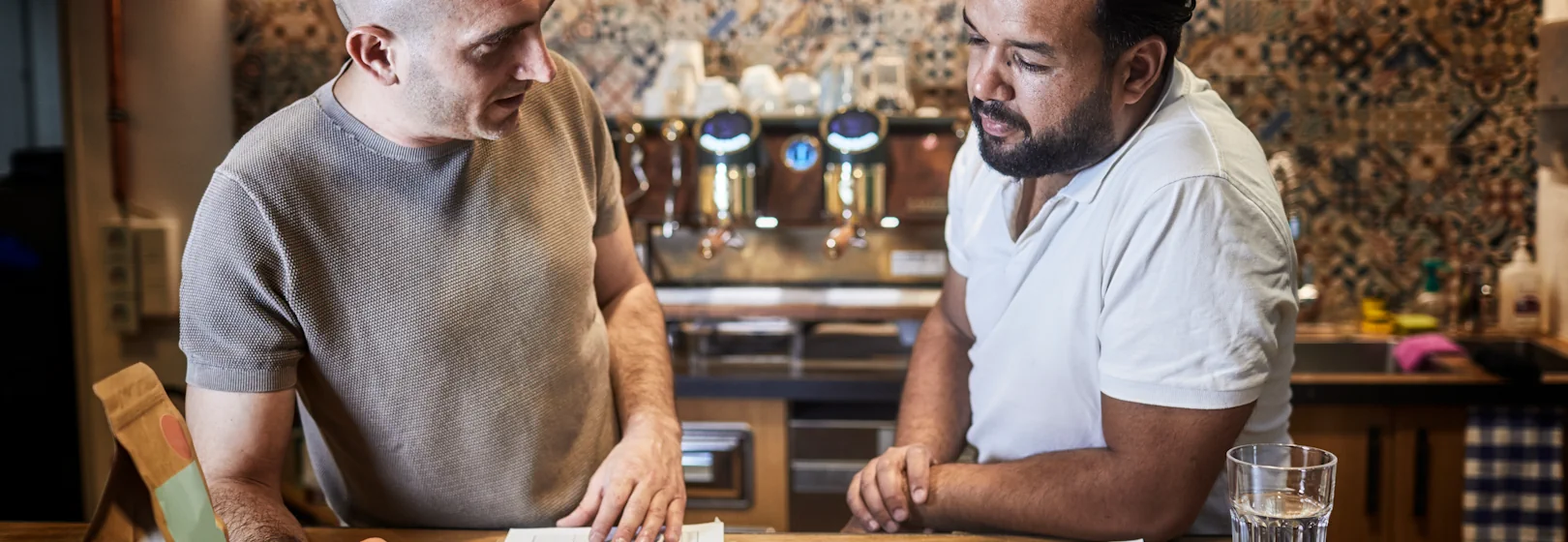
As coffee prices stay volatile, has sustainability become less of a priority for roasters?
The plethora of price hikes over the last few years has forced roasters to allocate more of their financial resources towards areas that need them most.
Green coffee prices reached historic highs in February 2025, prompting business owners to explore alternative funding options. Meanwhile, operating costs – from labour to rent to packaging – continue to climb, making cash flow management even more challenging.
In this tough economic climate, many roasters have shifted their buying practices, including sustainability-driven strategies and partnerships. Sustainability, once a cornerstone of specialty coffee, may have become less critical as businesses grapple with a tumultuous market.
Alternatively, price volatility may prompt some roasters to invest more in their relationships across the supply chain, thereby solidifying a commitment to collaboration and sustainability.
I spoke to Anne Djerai at Metropolis Coffee Company and Vava Angwenyi at Vava Coffee to learn more.
You may also like our article on why sustainability has become a buzzword in specialty coffee.

Rising coffee prices mean shifting strategies
Sustainability has been a core value for specialty coffee since its beginning. In addition to improving transparency and traceability, roasters advocated for higher, fairer prices paid to producers.
Consumers also started to demand more ethically sourced coffee. In 2020, nearly half of global coffee company launches mentioned some value associated with sustainability, double from the number in 2012.
The desire for more sustainable practices was not only focused on the production end of the supply chain, but also within the café setting. Over the last few years, more roasters and coffee shops have shifted to compostable cups and straws, as well as recyclable coffee packaging and plant-based milks, to meet the growing demand.
However, against a backdrop of record-high green coffee prices and rising operational costs, business operators had to reassess their sourcing strategies and operational efficiencies. Sustainability, once a tenet of the industry, may have become less of a priority for some.
High interest rates have also made it increasingly difficult to obtain credit. Roasters rely on short-term loans to cover the costs of large coffee purchases that are paid off over time. With banks restricting credit lines, operators have been forced to seek alternative funding sources or tighten their spending, which inevitably reshapes their sourcing strategies.
A chance to double down on values
With reduced access to traditional funding and tighter margins, some roasters will focus on more cost-effective coffees as a means to keep retail prices down for consumers. In turn, these operators may have shifted away from long-term producer and trade partners in favour of short-term buying options that help manage costs more efficiently.
Market volatility has mainly presented two options for roasters. They either increase their prices to maintain quality and sustain long-term partnerships or shift to more affordable, lower-quality coffees to keep prices low.
While raising prices could deter some customers from remaining loyal, a decline in coffee quality could have more serious consequences. Roasters have an opportunity to communicate more transparently about their pricing systems, reaffirming their commitment to quality and relationships. A shift towards lower quality coffee, meanwhile, could damage brand identity and perceived value.
Either way, record prices have forced coffee businesses to rethink their entire operations.
“We were pushed to take a hard look in the mirror at how we are sourcing, who our partners are, and how our projects will look moving forward,” says Anne Djerai, the CEO of Metropolis Coffee Company, an independent roaster in Chicago, Illinois, since 2003.
“Roasters are becoming more creative with how we source, forcing us to become more personal with our sourcing partners again, with a more ‘boots on the ground’ approach,” she adds.

Specialty coffee has an opportunity to reaffirm its values
With the C price sitting just below US $3/lb, the price gap between specialty and commodity narrows. Therefore, maintaining a commitment to sustainable practices, although potentially more costly in the short term, may give specialty coffee roasters an advantage over their commodity-grade counterparts.
Investing in environmentally, socially, and economically sustainable strategies, especially during periods of economic volatility, reaffirms roasters’ dedication to mutually-beneficial partnerships – a bonus for more discerning consumers.
Direct trade and relationship coffee can also offer more control over supply chains, potentially reducing costs in the long-term.
“It’s likely that some roasters, especially those operating on tighter margins, may feel pressured to adjust their sourcing strategies, potentially moving away from higher-priced lots or scaling back on more intensive, relationship-driven sourcing models,” says Vava Angwenyi, the founder of exporter Vava Coffee in Kenya.
“However, in my experience working in Kenya and across producer communities, the roasters who are truly values-aligned tend to view these price shifts as part of a longer-term journey rather than a short-term obstacle,” Vava adds.
To navigate market volatility successfully, the most resilient businesses will be those that prioritise transparency, consistent communication, and shared risk management. When both sides understand each other’s challenges and constraints, they can develop creative solutions that preserve business viability while maintaining quality and sustainability commitments.
These trusted partnerships create stability in an otherwise volatile market, enabling long-term planning despite short-term fluctuations.
“Transparency and communication will be crucial,” Vava says. “Producers also face escalating costs – fertilisers, labour, climate adaptation – and it’s important for both sides to remain committed to the shared goals of quality, sustainability, and equity. Relationships built on trust and mutual investment tend to weather price volatility better than purely transactional ones.”
Adaptation strategies for roasters
Specialty coffee is therefore at a tipping point and needs to maintain its values, including sustainability, in order to retain its point of differentiation.
“Every obstacle is an opportunity,” Anne says. “Relationships are vital, and roasters need to stay committed to their partners at origin and adapt to the changes in market conditions.”
One solution is for roasters to maintain their higher-quality offerings in addition to more accessible blends, allowing them to appeal to a wider client base across different price points. This can help maintain quality while reducing costs.
Sourcing high-quality coffee can make up about 30% to 40% of overall expenses for a roaster, so managing this more closely is vital for the health of the business. Maintaining direct trade relationships can help reduce increased coffee costs; buying spot coffees, available immediately, can be more expensive than contracting coffee with a long-term producer partner.
Roasters may need to make other changes to differentiate themselves in the market, which may include rebranding. Creating a fresh, new look with appealing visuals and effective messaging can improve the roaster-to-consumer connection. Engaging with consumers and building customer and wholesale relationships can also be beneficial, especially through educational talks, training, and the sharing of more information.

As it navigates unprecedented market conditions, specialty coffee stands at a crossroads. While market volatility may eventually subside, the current challenges reveal a fundamental truth: it’s the strength of connections that will determine collective resilience.
By prioritising transparency, consistent communication, and shared value creation, producers, roasters, and traders can emerge from this period with a supply chain that is not just more equitable but ultimately more stable and capable of weathering future challenges.
Enjoyed this? Then read our article on why coffee brands need to care about more than sustainability certifications.
Perfect Daily Grind
Want to read more articles like this? Sign up for our newsletter!
Michaela has been working in the coffee industry for over ten years. She is passionate about ensuring producers have a bright future and loves to share their stories to spread awareness for their hard work.


